


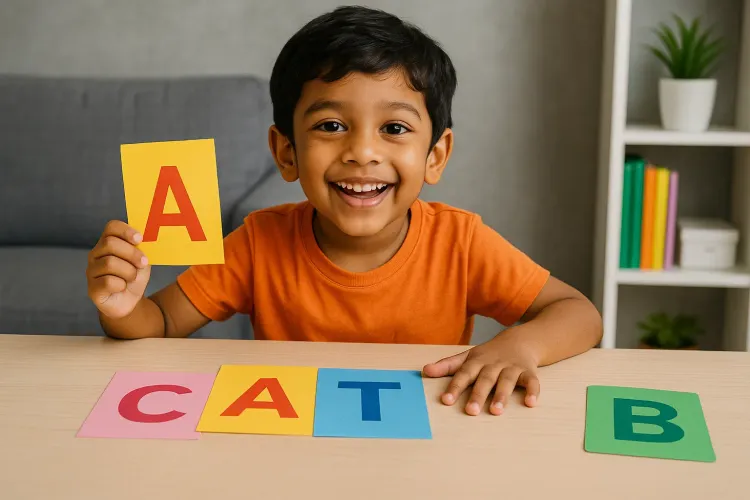
Clear speech starts with clear listening. Before children can say words with ease, they first need to hear the sounds inside them. This is where phonics plays an important role.
Phonics helps children connect letters with sounds. It also helps them notice how words are built. When children understand these sound patterns, they can read, spell, and speak with more confidence.
For young learners, this foundation can shape how they pronounce words, express ideas, and join daily conversations.
What Phonics Means for Young Learners
Phonics is the link between written letters and spoken sounds. It teaches children that letters and letter groups represent sounds.
For example, children learn that the letter “b” makes the /b/ sound. They also learn that “sh” makes one sound, even though it has two letters.
This may seem simple, but it is a key part of early language growth. Children begin to see that words are not random. They are made of sounds that can be heard, spoken, blended, and written.
Through phonics, children build skills such as:
- Hearing the first, middle, and last sounds in words
- Blending sounds to read simple words
- Breaking words into sounds for spelling
- Recognising common sound patterns
- Saying words more clearly and with better control
These skills support both reading and speech.
How Phonics Supports Pronunciation
Pronunciation is about saying words clearly and correctly. Children often learn speech by listening to adults, songs, stories, and friends. However, they may still struggle with certain sounds.
Some children may mix up similar sounds, such as “p” and “b”. Others may leave out ending sounds in words. Some may find longer words hard to say because they cannot hear each sound clearly.
Phonics gives children a clear way to notice these sounds.
When children learn to break words apart, they become more aware of how each sound works. They start to hear the difference between “cat,” “cap,” and “cab.” They also learn that changing one sound can change the whole word.
This sound awareness can improve how they speak. It helps children slow down, listen closely, and try the correct sound again.
The Role of Listening in Clear Speech
Good speech begins with careful listening. Children need to hear sounds clearly before they can repeat them well.
Phonics lessons often include listening games, rhymes, songs, and sound matching. These activities help children tune in to small sound changes.
For example, a teacher may ask children to find words that start with the same sound. They may clap out syllables or match pictures with beginning sounds. These simple tasks train the ear.
Over time, children become more aware of sound patterns in words. This helps them speak with better rhythm, stress, and clarity.
Listening also supports self-correction. A child who can hear the difference between “ship” and “sip” is more likely to notice when a word sounds wrong. This makes practice more useful.
Why Blending and Segmenting Matter
Two key phonics skills are blending and segmenting.
Blending means joining sounds together to make a word. For example, /c/ /a/ /t/ becomes “cat.”
Segmenting means breaking a word into sounds. For example, “dog” becomes /d/ /o/ /g/.
Both skills support clear speech because they teach children how words are formed. They help children understand that each sound has a place.
When children can blend sounds, they can read new words with more ease. When they can segment sounds, they can spell and pronounce words more carefully.
This is useful for longer words too. A child who can break “fantastic” into smaller parts will find it easier to say. They are less likely to rush, skip sounds, or guess.
Building Confidence Through Clearer Speech
Clear speech does more than help children pronounce words. It also helps them feel more confident.
Children who can express themselves clearly are more likely to join group talks. They may answer questions with less fear. They may also enjoy reading aloud, storytelling, and role play.
This confidence can affect many parts of learning. A child who speaks clearly may find it easier to make friends, ask for help, and share ideas in class.
Of course, every child grows at a different pace. Some children need more time with certain sounds. Others may need more practice hearing and using sound patterns.
A kind and patient learning space makes a big difference. Children should feel safe to try, make mistakes, and try again.
How Parents Can Support Speech at Home
Parents can support phonics and speech in simple ways at home. Short, regular practice is often better than long lessons.
Helpful activities include:
- Reading aloud together each day
- Playing rhyming games
- Asking children to spot words with the same first sound
- Singing songs with clear sound patterns
- Slowing down tricky words and saying each sound
- Praising effort, not just correct answers
Parents can also model clear speech during daily routines. For example, they can name items during mealtimes, shopping, or play. This gives children more chances to hear and use words in context.
It is also helpful to avoid correcting every mistake at once. Too much correction can make children feel shy. A better approach is to repeat the word clearly in a natural way.
For example, if a child says, “I see a tat,” the parent can respond, “Yes, you see a cat.” This gives the right model without pressure.
Where Structured Phonics Lessons Help
Some children benefit from a more guided approach. A structured class can help them build sound skills step by step.
Programmes such as Lorna Whiston’s phonics class support young learners through interactive lessons, stories, songs, games, puppets, and puzzles. This kind of setting helps children practise sounds in a fun and steady way.
A structured approach can be useful because it follows a clear order. Children do not just memorise words. They learn how sounds work, how to blend them, and how to use them in reading and speech.
This gives them a stronger base for school and daily communication.
Conclusion
Phonics, pronunciation, and clear speech are closely linked. When children learn to hear sounds, connect them with letters, and use them in words, they gain more control over language.
This supports reading, spelling, speaking, and confidence. With patient practice at home and guided support when needed, children can build clearer speech and stronger communication skills from an early age.
