


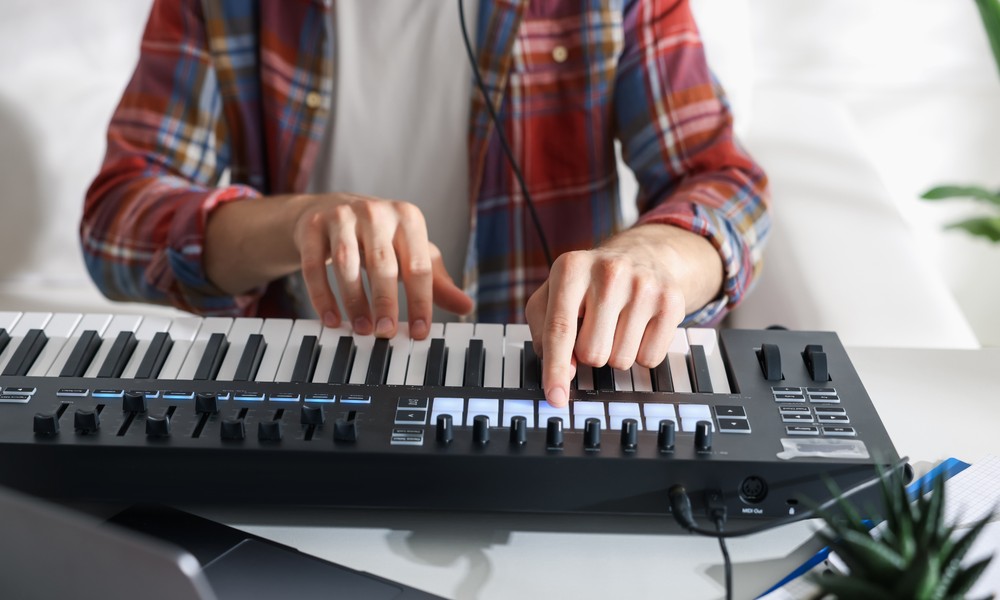
In modern music, “piano player” and “keyboard player” aren’t the same thing. A piano player can have beautiful touch, strong technique, and deep musicality-and still feel out of place on a pop gig, in a worship band, or inside a production-heavy R&B session. A keyboard player, on the other hand, is built for versatility: multiple sounds, multiple roles, and the ability to support a song that’s shaped as much by production as it is by performance.
This isn’t about “better” or “worse.” It’s about skill sets. If you want to work in modern genres, here are nine skills that tend to separate players who only feel comfortable on acoustic piano from players who can thrive on any stage or in any session.
1) Sound selection and tone matching
A modern keyboardist doesn’t just play notes-they choose sounds that fit the artist, the genre, and the arrangement. That means knowing when to reach for:
- warm electric piano vs bright piano
- analog-style pads vs digital synth textures
- tight clav/funk comping sounds vs wide, airy layers
It also means learning how to match the “sonic world” of the band. If the guitars are bright and jangly, maybe your keys need to be darker. If the track is deep and sub-heavy, your midrange choices matter more than your voicings.
2) Playing in roles, not in “piano mode”
Piano players often default to “full hands” playing-bass in the left, chords in the right, fills in between. Keyboard players think in roles:
- pad + glue (support and width)
- rhythmic engine (stabs, syncopation, comping)
- hook instrument (simple motifs, lead lines)
- ear candy (small details that appear and disappear)
In many bands, the keys shouldn’t be a mini-orchestra. They should be one specific part of the production.
3) Groove literacy (locking with drums and bass)
Modern genres are groove-first. If your time feel is slightly stiff, your part won’t sit right-even if your notes are perfect.
Keyboard players learn to:
- play behind or ahead of the beat intentionally
- accent the same rhythms the drummer accents
- simplify their voicings so the groove is clearer
- use repeated rhythmic patterns without drifting
In pop, hip-hop, funk, worship, and R&B, groove is the currency.
4) Voicing choices that stay out of everyone’s way
On an acoustic piano, you can get away with fuller voicings. In a modern mix, dense chords can quickly fight vocals, guitars, and synth layers.
Keyboard players build voicings that:
- avoid the singer’s range
- leave the low end to bass/subs
- emphasize color tones (3rd/7th/9th) without clutter
- use spread voicings and inversions for width
The goal is clarity, not “maximum harmony.”
5) Basic synthesis and shaping sounds
You don’t have to be a sound designer-but modern keyboardists typically understand the essentials:
- ADSR (attack, decay, sustain, release)
- filter cutoff and resonance
- LFO for motion (vibrato, tremolo, pulsing)
- layering and splitting patches across the keyboard
Even small tweaks-like increasing attack for a softer pad, or rolling off brightness to sit under vocals-can turn a “meh” sound into a professional one.
6) Patch changes, splits, and performance workflow
This is one of the biggest real-world differences: keyboard players manage the logistics of modern playing.
They know how to:
- set up splits (bass left, pad right, lead on top)
- stack layers (piano + pad, EP + bell, etc.)
- organize patches by setlist
- switch sounds quickly without gaps
- use expression pedals, mod wheels, and velocity curves
A pianist might play a whole set on one sound. A keyboardist often changes sounds every section.
7) Production awareness (playing like a record)
In many modern gigs, you’re not trying to sound like “a great live piano.” You’re trying to sound like the record-or like a modern production.
That means understanding:
- what parts are iconic hooks vs background texture
- when to double a synth line instead of inventing a new part
- how to play minimal parts that still feel full in the mix
- how to mimic programmed rhythms (without sounding robotic)
This mindset shift is huge-and it’s why structured learning resources like keyboard courses online can be a shortcut: you’re not just building technique, you’re building modern musical vocabulary.
8) Comping vocabulary across genres
A pianist may have strong classical chops, but a keyboardist needs genre-specific language:
- funk comping with tight rhythmic muting and stabs
- gospel-inspired voicings and passing chords
- pop eighth-note patterns that support vocals
- R&B neo-soul pockets and tasteful reharmonization
- EDM-style triads and octave leads that hit hard
The notes matter, but the style matters more.
9) Taste: knowing what not to play
This is the “master skill” that makes everything else work. Keyboard players develop the ability to make a part feel essential without being constant.
Taste looks like:
- leaving space after vocal lines
- reducing density in verses so choruses expand
- resisting fills that distract from the hook
- repeating a simple motif long enough for it to become memorable
In modern genres, taste isn’t a bonus-it’s the job.
The takeaway
A piano player can be an incredible musician and still struggle in modern settings if they haven’t built the keyboardist toolkit: sound choices, workflow, groove, genre vocabulary, and production awareness. The great news is that these skills are learnable-and once you start thinking like a keyboard player, you become more valuable in every room you walk into.
Because modern keys aren’t about playing more. They’re about making the song feel right-on stage, in the mix, and in the moment.
